
QUIET COMPANIONS


Working under the name Nekonome Koubou and running her studio Kamon Seibutsusha, the Japanese artist Ayumi Horiai has spent years building a world shaped by childhood memories, quiet observation, and the small creatures that have accompanied her throughout life.
It is a world where polymer clay geckos bloom with flowers, black cats carry wildflowers, and every creature seems to have a story of its own.
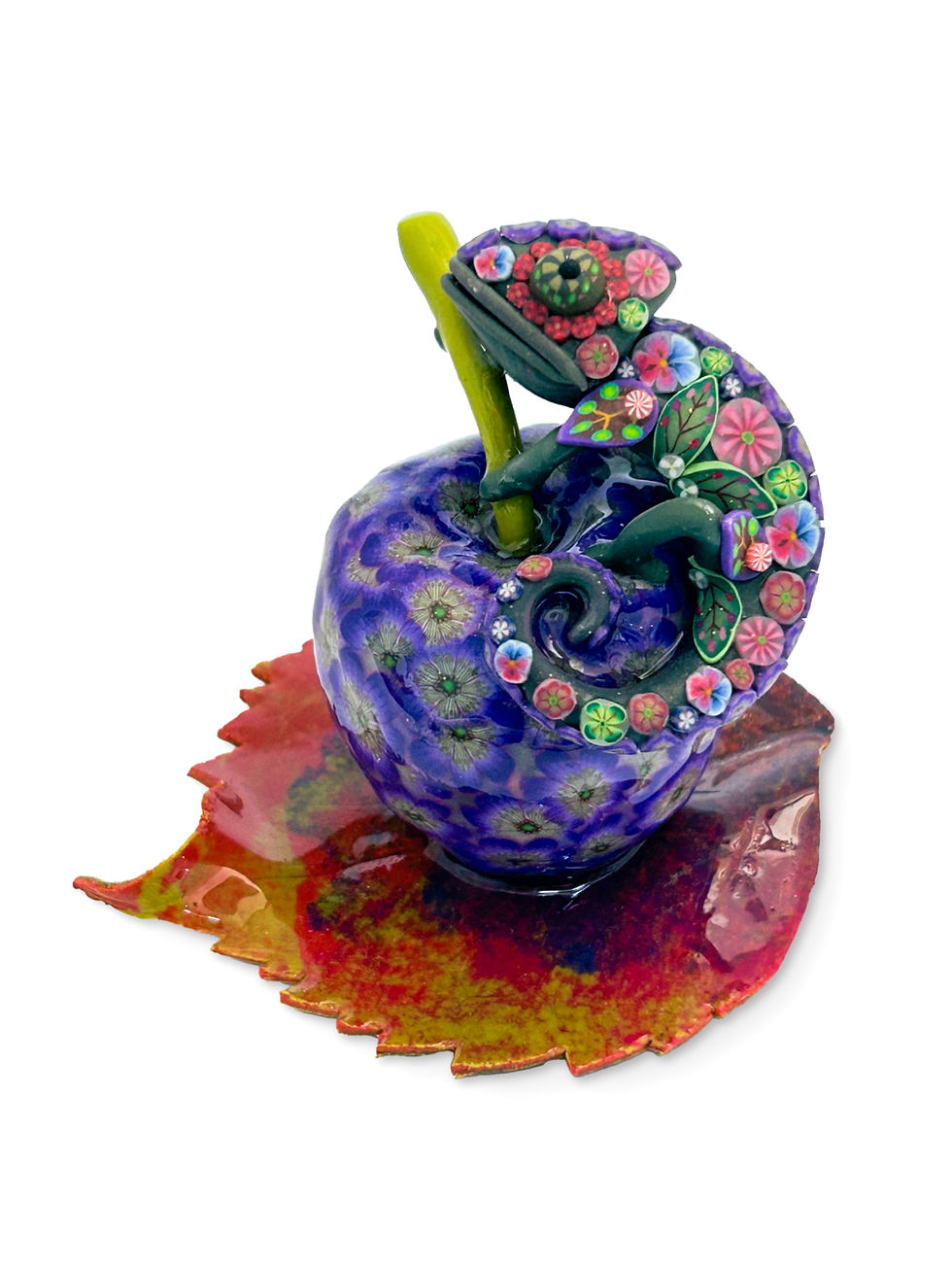
Thoughtfully sculpted and rich in symbolism, her work invites viewers to slow down, look closer, and discover the stories hidden within each piece.
Her path to polymer clay was anything but direct. Ayumi began as a jewelry designer, working with antique and vintage beads and participating in art fairs and department store events across Japan. It was a chance encounter with a buyer from an antique jewellery shop in a historic Tokyo hotel that changed the direction of everything.


"If you only use commercially available beads, it is difficult to become a truly unique maker," the woman told her. "Try creating each bead yourself, starting with the material." Those words stayed with her.
Ayumi began experimenting with glass, metal, enamel, and eventually polymer clay. "At the time, polymer clay was still difficult to find in Japan, and very little information was available about how to use it," she recalls. "There seemed to be no clear rules or correct answers, and I loved the process of exploring and discovering things through trial and error."
It was through millefiori technique that Ayumi found her artistic language. Fascinated by the way even the smallest change in colour could completely transform a pattern, over time she began pushing the technique beyond its traditional two-dimensional form.
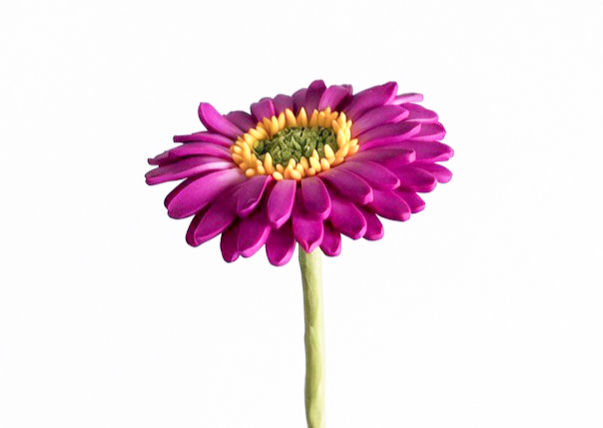
"When I carefully observed real plants, I noticed that petals and leaves are themselves made up of countless colors, veins, and subtle patterns," she explains. "That realization inspired me to create the petals and leaves as millefiori designs." Instead of remaining flat patterns, her millefiori designs became flowers assembled petal by petal, the way nature builds them.
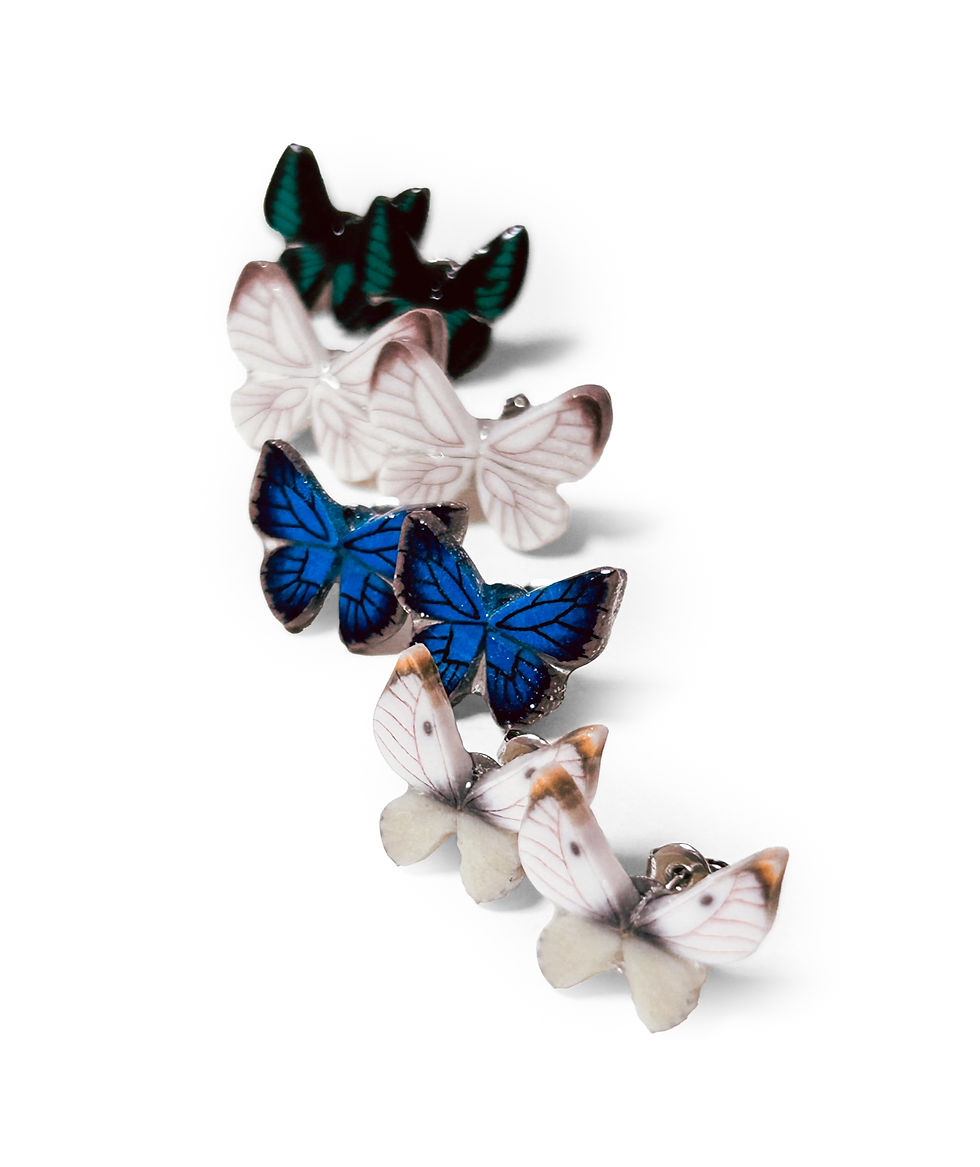
Nature, however, has always been much more than visual inspiration. It is deeply intertwined with Ayumi's memories. Wildflowers, butterflies, frogs, geckos, and countless small creatures have quietly accompanied her throughout life, becoming part of the world she creates today.
"What quietly lives inside my work is an appreciation for these small lives and the changing landscapes that accompany them." Ayumi remembers making flower crowns from clover after school, watching evening primroses bloom at dusk, and now finds herself observing swallowtail butterflies laying their eggs on the mandarin tree outside her home.

These small seasonal encounters often become references for her millefiori patterns, preserving moments that feel increasingly precious as familiar landscapes slowly change.
The creatures themselves came from a much harder place. In 2018, Ayumi underwent surgery and cancer treatment. During that difficult period, her two beloved cats rarely left her side.
"There were times when I felt physically and emotionally exhausted, but whenever I looked up, my cats were quietly watching over me," she says. "Their gentle gaze gave me strength and comfort again and again." It was through that experience that she came to understand something that continues to guide her work today: kindness doesn’t always need words. "In Japan, we have a saying that 'the eyes speak as much as words.'"

The geckos, chameleons, frogs, and black cats that now populate her artistic world all carry that same quiet quality: a slightly upward gaze, as if gently watching over whoever holds them.
"If the creatures I create can bring a smile, comfort, or a small sense of reassurance to someone, I would be very happy."
Each creature is sculpted entirely by hand, without molds, and its character is expressed not through paint but through the millefiori patterns built into the clay itself. Ayumi also studies the skeletal anatomy of every animal she creates, carefully observing the placement of joints and the range of natural movement before capturing what she describes as a fleeting moment, as though the creature might move again at any second.
Even their names carry stories. One of her flower-patterned geckos is called Mimamo, inspired by the Japanese word mimamoru "to watch over." While geckos are traditionally considered lucky creatures in Japan and are believed to protect the home, Ayumi imagined something different. Rather than watching over a building, mimamo quietly watches over the people who live inside it.


Although there may be fewer polymer clay artists in Japan than in Europe or the USA, Ayumi is doing her best to promote the medium beyond the walls of her studio. For nearly twenty years, she has held annual solo exhibitions at a gallery in Ginza, Tokyo, while also exhibiting and teaching in Taiwan. Yet what she treasures most isn't the "show" itself, but the small moments that happen around it.
"I am always grateful to the gallery owners, shop owners, staff members, collectors, and workshop participants who support my work," she explains. "It brings me great joy to watch people carefully look at each piece, smile when their eyes meet a creature's gaze, or even quietly speak to the animals as if they were alive." Those encounters, she adds, often carry "a sense of surprise, curiosity, and affection."
The world of Kamon Seibutsusha continues to grow. There are still new creatures waiting to be made, flowers waiting to bloom, and stories waiting to find their way into clay through Ayumi's hands. Looking at the quiet conversations her sculptures continue to inspire, it is hard not to feel that many more people are still waiting to meet them.


Comments